
Child combat sports: recreation or competition?
Last updated: September 5, 2026
Last updated: September 5, 2026
A child’s combat sports journey: discovery, regular practice, technical progress and optional competition. Review the plan with the young person.
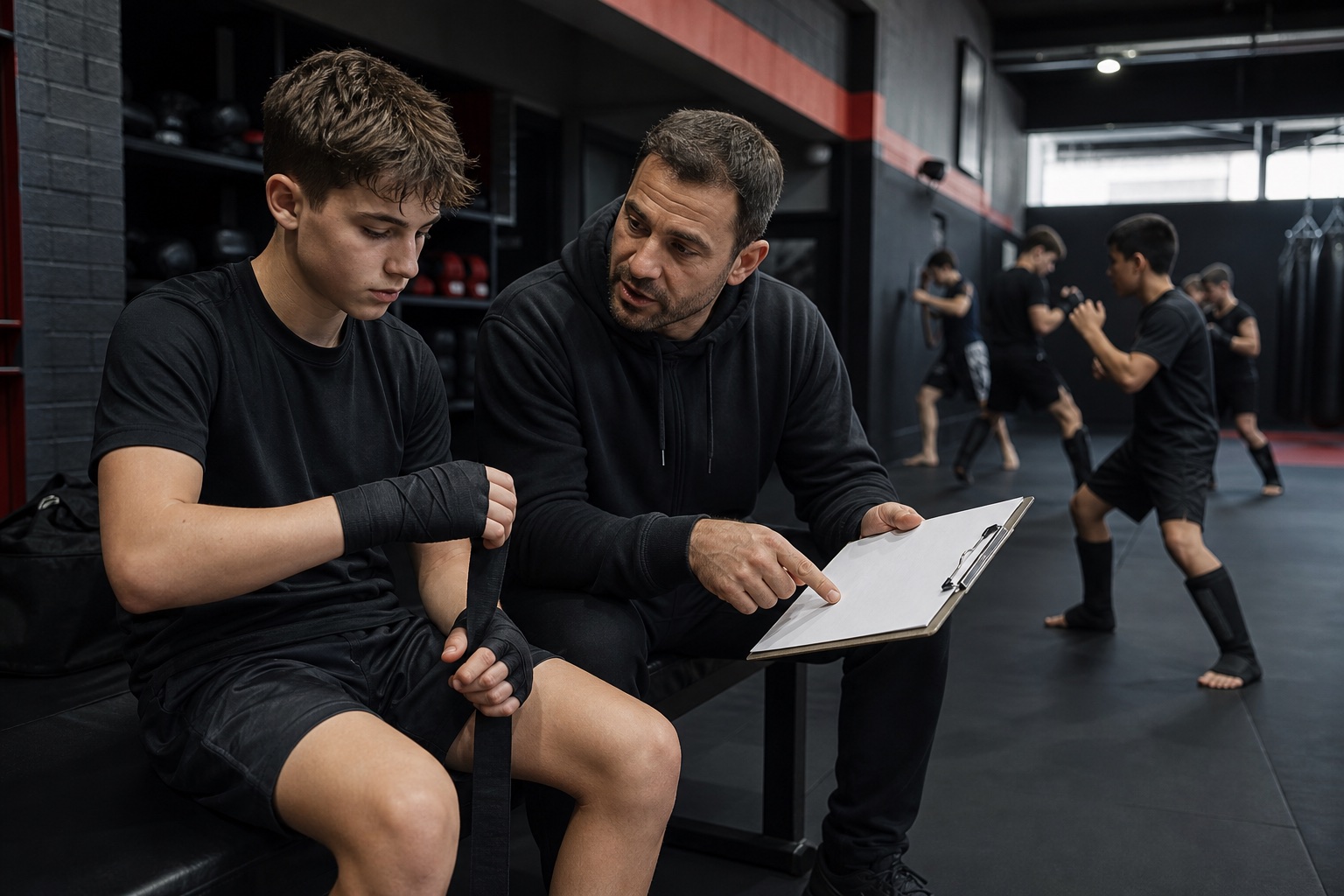
Training for enjoyment, skills and a group of friends is not a waiting room for competition. A young person can progress for years without entering an event. Competition should follow the child’s interest and a suitable framework, not a parent’s ambition.
Regular recreation can mean one or more weekly sessions. Technical progression can give a season clear goals without an official bout. Supervised competition adds preparation, rules, travel and emotional demands. Discuss that choice with the young person, coach and parents, including the right to change their mind.
Useful signs include the young person asking about events, consistent attendance, control when an exercise goes badly and respect for safety rules. School, sleep, health and family life must remain compatible. Fear of disappointing adults, persistent fatigue or a loss of enjoyment are reasons to reconsider. The ADEPS framework prioritises young participants’ safety and integrity.
The club’s public material mentions experience involving adult organisations including UFC, PFL, KSW, ARES Fighting and Glory. This does not establish that those athletes started in its children’s pathway, nor promise any junior a professional career. Ask for verifiable facts about any proposed event: rules, supervision, costs, recovery and selection. Consult the official ADEPS ethics guidance.
Spend ten minutes with the young person and coach: what do they enjoy, what have they learned, what do they want to try next, and is the pace sustainable? A useful annual plan follows those answers. Medals and adult organisations are not the measure of a child’s wellbeing.
Parents · Kick Boxing Junior (FR) · Safety before courage · Possibilities, not treatment
Your first trial class is free. Come and meet the coach, observe the session and let your child form an opinion.
The link opens our contact assistant, not a live booking calendar. Tell the club which class interests you and confirm the time before travelling. A click is not a confirmed booking.